Full rules
The normative text of the format. If you just want to know whether your deck complies, paste it into the checker and it will tell you in a second: it applies all of these rules for you. What changed and when is in the changelog.
Reference translation. The official version of the rules is the Spanish one. See the official version
Definitions
For the purposes of these rules, the following terms mean:
Deckbuilding Restrictions
The following restrictions apply to deck construction and will be checked before the tournament begins.
Decks may not include two-card combinations that the Commander community has classified as unsafe for Bracket 3, that is, playable only from Bracket 4 upward.
Evaluation criteria:
- a)The list originated from EDHREC's "Early Game 2-Card Combos" category, the result of the Commander Bracket Combo Vote, and was frozen at the WolfCon 2026 cutoff: that is the format's official starting point. The vote asks three questions about each combo: whether it can reasonably be executed within roughly the first six turns, whether its prerequisites (ignoring mana) are simple enough to still call it a two-card combo, and whether it is easy to turn into a win.
- b)Since that cutoff, the list no longer follows EDHREC. From November 2, 2026 it is decided by a measured formula, not by a vote or by anyone’s judgment: each combo earns points for how fast it works, what it produces, the setup it needs and how much it wins in tournaments, and at 4 points or more it is banned. Changes take effect on the first Monday of each month, and every combo’s score is public on the combo scores page.
- c)Every change is recorded in the public changelog, with the date, the combo’s score, and the data cutoff against which it was checked.
Examples of banned combinations:
| Combo | Result |
|---|---|
| Thassa's Oracle + Demonic Consultation | Win Condition |
| Kinnan, Bonder Prodigy + Basalt Monolith | Infinite Mana |
| Heliod, Sun-Crowned + Walking Ballista | Infinite Damage |
Note: The list was frozen on September 2, 2026 with 1,061 combos. EDHREC lists others that are not here, and this list keeps 167 that no longer appear there; the decision was not to chase that difference: the EDHREC vote (about sixteen people per combo, none of them players in our tournaments) is not the authority for this format. Each combo is reviewed here when a player asks for it. The "roughly six turns" threshold is not evaluated by the checker card by card: it is the first question voters answer, and it comes from Gavin Verhey's (Wizards of the Coast) definition of the early game. A combo of three or more cards is not banned by this rule, even if it is infinite. That is one of the deliberate differences between Bracket 3 and cEDH.
Each deck may include a maximum of three (3) Game Changers, according to the official list published by Wizards of the Coast.
Note: The Game Changers list is published by Wizards of the Coast and is updated periodically. The version that applies is the one from the data cutoff declared by the tournament, which can be checked in the public changelog, not the one from the day you play.
A maximum of 3 of these cards in your deck
If your deck includes more than 3 Game Changers, you must remove the extras before the tournament. The decklist checker can help you identify them.
Game Changers list (53):

Ad Nauseam
Ancient Tomb
Aura Shards
Biorhythm
Bolas's Citadel
Braids, Cabal Minion
Chrome Mox
Coalition Victory

Consecrated Sphinx
Crop Rotation
Cyclonic Rift
Demonic Tutor
Cards are banned if the main purpose of their effect is to eliminate, disable, or significantly restrict players' ability to produce mana from lands.
Evaluation criteria:
- a)Destroy, exile, or return to hand four (4) or more lands per player without providing an equivalent replacement.
- b)Prevent lands from being tapped in a widespread and sustained way.
- c)Change the type of all or most of the opponents' lands, removing their ability to produce colored mana.
Do you have any of these cards in your Bracket 3 deck?
You must remove it before your next tournament. These cards are banned under Rule 1.3. Replace it with another card that does not violate this restriction.
Banned cards (105):
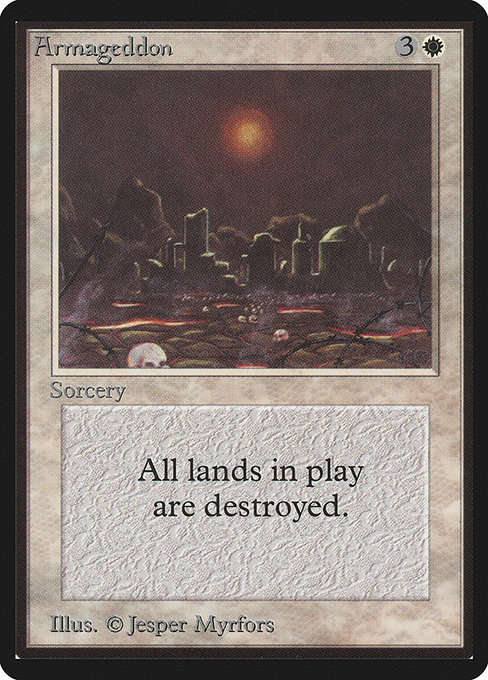
Armageddon

Sunder

Ruination

Devastation

Obliterate

Jokulhaups

Decree of Annihilation

Blood Moon

Magus of the Moon
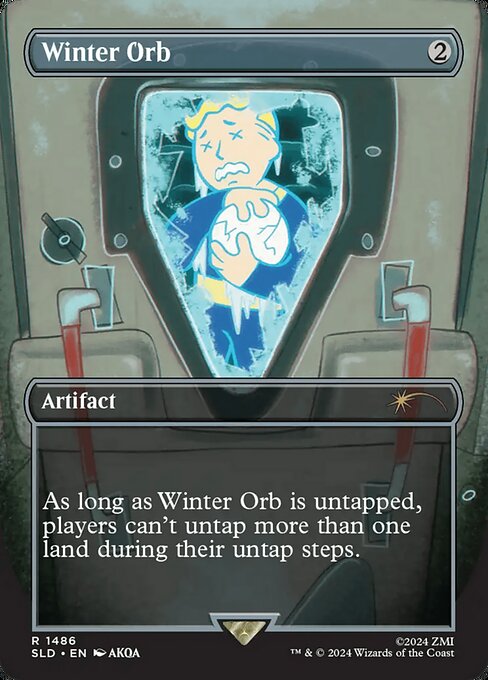
Winter Orb

Static Orb

Rising Waters
Note: The list is closed: a card that does not appear on it does not violate this rule, even if it looks similar. If you spot a card that should be on it, report it through the suggestions form and it will be evaluated for the next cutoff. This is deliberate: a list that could be extended case by case during the tournament would make the same deck legal with one judge and illegal with another.
In the 1v1 format, two things are banned: lands whose effect destroys a land without its owner getting a land onto the battlefield as a replacement, and cards that can destroy two or more lands in a single resolution. In multiplayer both are legal: only Rule 1.3 applies.
Evaluation criteria:
- a)A card violates this rule if it is a land, its text allows it to destroy one or more target lands, and it does not give the owner of the destroyed land a land on the battlefield.
- b)The replacement must be a land. Receiving creatures, tokens, Treasures, or cards is not a replacement: what this rule protects is the ability to produce mana, and a creature does not produce mana.
- c)A card is banned under the second criterion if it can destroy two or more lands in a single resolution. It makes no difference whether the text says "lands," "permanents," or "noncreature permanents": lands are permanents, and what matters is how many it can take out at once.
- d)This rule does not apply in multiplayer. A deck with these cards is legal at a multiplayer table and stops being legal in 1v1, so the check must be made against the tournament's format.
Do you have any of these cards in your Bracket 3 deck?
These cards are banned under Rule 1.4, which applies only in 1v1 tournaments. If your tournament is in that format, remove it before playing and replace it with another card; in other formats you can keep playing them.
Banned cards (12):
Dust Bowl
Encroaching Wastes
Gnottvold Slumbermound
Memorial to War
Strip Mine
Tectonic Edge
Wasteland
Lavaball Trap
Numot, the Devastator
Rain of Salt
Terastodon
Violent Ultimatum
Note: Why destruction is banned and not recursion: it is 7 cards versus 594. The permanents and spells that return something from the graveyard number 594 in Commander, and all of them have legitimate uses that have nothing to do with lands; these 7 have exactly one function. The rule is always written about the half that can be enumerated. Why the format split: at a four-player table, sacrificing a Wasteland to destroy a land is a 1-for-1 in lands (both players end up with one fewer) that only sets back one of your three opponents while the other two develop freely. Turning it into a prison requires recursion plus extra land drops: an assembly of three or more cards, the same category this rulebook explicitly allows by banning, in Rule 1.1, only combos of exactly two. In 1v1 the same exchange is against your only opponent, with tempo in your favor, and repeated it is a prison. Why all 7 and not just the free ones: Dust Bowl does not sacrifice itself (it sacrifices another land), so it stays on the battlefield and destroys a land every turn without needing any recursion. It is the only self-contained engine on the list, and a line drawn by mana cost would leave it legal. Lands that replace (Ghost Quarter, Field of Ruin, Demolition Field, Volatile Fault) are legal in both formats. This list is derived from the cards' text and is updated with each new set.
Cards that grant one or more additional turns to any player are banned.
Evaluation criteria:
- a)A card violates this rule if its text grants any player an additional turn. It does not matter whom it grants it to: Eon Frolicker gives it to an opponent and is banned all the same, because what is closed off is the category, not the intent of whoever plays it.
- b)Mentioning the concept is not enough. Stranglehold mentions extra turns in order to deny them, and Trouble in Pairs in order to trigger off them; neither grants one, so neither violates this rule.
- c)The list is derived from the cards' text and rebuilds itself every Monday from Scryfall, so it absorbs each new set without anyone having to remember.
Do you have any of these cards in your Bracket 3 deck?
You must remove it before your next tournament. These cards are banned under Rule 1.5. Replace it with another card that does not violate this restriction.
Banned cards (53):
Alchemist's Gambit
Alrund's Epiphany
Beacon of Tomorrows

Capture of Jingzhou
Chance for Glory
Emrakul, the Promised End
Eon Frolicker
Expropriate
Final Fortune
Gonti's Aether Heart
Ichormoon Gauntlet
Kang the Conqueror
Note: This rule replaces the former 2.1, which banned "strategies whose goal is to chain turns." That was a predicate about the intent of a list, and a list contains no intentions: it forced the checker to guess, and in practice it blocked decks with a threshold of three or four cards that was not written anywhere in the rules. The category, on the other hand, can be enumerated (it is 53 cards), and the rule is always written about the enumerable half. The underlying reason for closing it off entirely rather than setting a cap: a deck that brings the card will play it sooner or later, and as soon as it does, the judge has to decide whether that was "chaining." Banning it at deckbuilding turns a table argument into a list check. Yes, this makes the format stricter than Wizards' Bracket 3 on this specific point, and it is deliberate: an occasional extra turn costs little to give up and the cost of over-including is zero, while the gap is paid for by the tournament. This ban used to live in the Game Restrictions and was penalized at the table with a Backup plus Turn Loss; now, like any other banned card, it cannot reach the table inside a certified deck, and if it shows up, Rule 5.3 applies.
Game Formats
Multiplayer tables play by the official Commander rules. 1v1 departs from them on three points, and those are the three worth knowing before you sit down.
| Parameter | Multiplayer table | 1v1 |
|---|---|---|
| Starting lifeForty life in a two-player game drags out the damage race without making it more interesting. Thirty keeps the pressure on without turning it into a one-hit race. | 40 | 30differs from multiplayer |
| MulliganIn multiplayer Commander the first mulligan is free: you draw seven again and put no cards on the bottom. In 1v1 the standard London mulligan is used, so the first one already costs you a card on the bottom, just like in any two-player format. | London, with the first one free | London, with no free mulligandiffers from multiplayer |
| Commander damageIt stays in 1v1. With 30 life it is still a real path to victory, and it is what preserves the commander's weight in the game. | 21 cumulative per commander | 21 cumulative per commander |
| Command zone and tax | Yes, with a cumulative {2} tax | Yes, with a cumulative {2} tax |
| Round structureA single two-player game rewards the opening hand too much. In a best of three, the variance of one bad hand no longer decides the round. | A single game | Best of threediffers from multiplayer |
| SideboardNot in best of three either: no cards are changed between games. The certified deck is the same from the start to the end of the round. | Not used | Not used |
Everything else follows the Commander rules
Any rule that does not appear in this table is played exactly as in the official multiplayer Commander format. This section only states what changes or what is worth putting in writing; it does not replace the Commander rules, it builds on them.
The checker does not verify these parameters: they cannot be read from a decklist, they are applied at the table. There are 3 differences between one format and the other, and Rule 1.4 adds a fourth one about deckbuilding — that is why the format is declared when checking a deck.
Banned Combos
Two-card combinations banned under Rule 1.1. From November 2, 2026 the list is decided by a measured formula, on the first Monday of each month; every change is recorded in the public changelog.
List inherited from EDHREC and frozen on September 2, 2026. From November 2, 2026 a measured formula updates it on the first Monday of each month.
Does your deck contain any of these combinations?
If your Bracket 3 deck includes both cards of any of these combos, you must remove at least one of them before your next tournament. Use the checker or search for your cards here.
Filter by color identity


Abdel Adrian, Gorion's Ward + Animate Dead
Tap to see details

Abdel Adrian, Gorion's Ward + Dance of the Dead
Tap to see details

Abdel Adrian, Gorion's Ward + Eldrazi Displacer
Tap to see details

Abdel Adrian, Gorion's Ward + Last Voyage of the _____
Tap to see details

Abdel Adrian, Gorion's Ward + Necromancy
Tap to see details
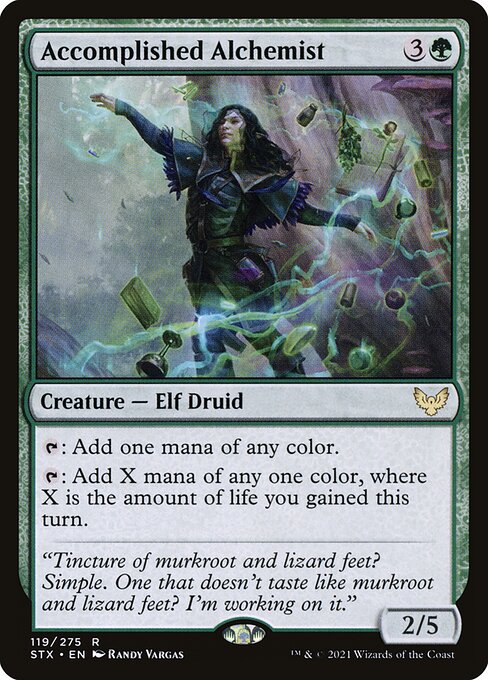

Accomplished Alchemist + Freed from the Real
Tap to see details

Accomplished Alchemist + Pemmin's Aura
Tap to see details


Acererak the Archlich + Aluren
Tap to see details

Acererak the Archlich + Rooftop Storm
Tap to see details

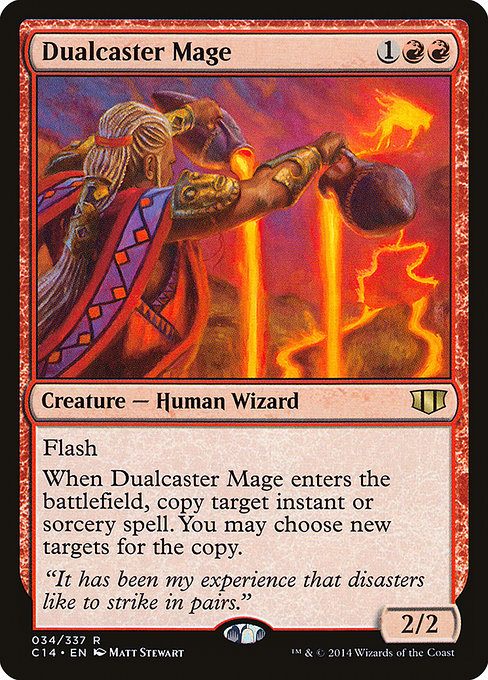
Acrobatic Maneuver + Dualcaster Mage
Tap to see details
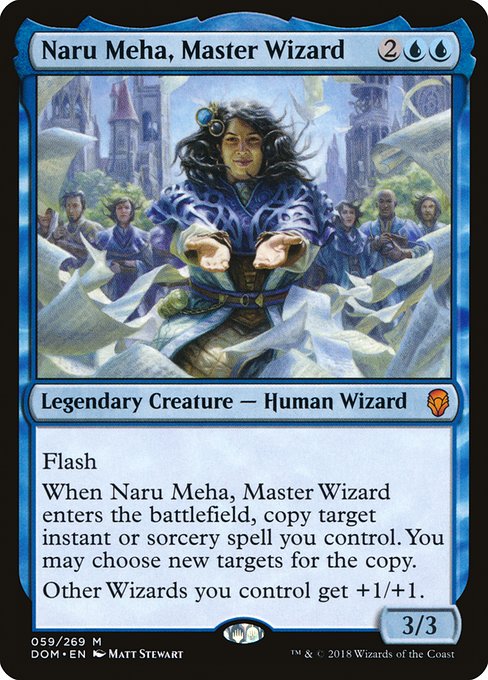
Acrobatic Maneuver + Naru Meha, Master Wizard
Tap to see details

Ad Nauseam + Cloudsteel Kirin
Tap to see details
Page 1 of 89 — Showing 1-12 of 1061
Penalties
With mandatory certification, a banned card cannot reach the table inside a certified deck. What is penalized is a physical deck that does not match its certificate, and gameplay infractions.
Deckbuilding infractions do not depend on the format; what changes is what counts as a banned card, because Rule 1.4 does not apply in multiplayer.
| Infraction | First Offense | Repeat Offense |
|---|---|---|
| 4.1Deck without a valid certificate | Not registered for the tournament | — |
| 4.1Physical deck ≠ certified list, no banned card | Warning + fix before the next round | Game Loss |
| 5.3Physical deck ≠ certified list, with a banned card | Game Loss + Substitution | Disqualification |
| 3.6Fraud in the deck declaration | Disqualification | — |
Procedures
When a backup is possible:
- a)The game state is reverted to the moment immediately before the illegal action.
- b)All cards involved in the illegal play return to their original zones.
- c)If a full backup is not possible because of the complexity of the game state, the Head Judge will determine the best reasonable approximation.
When a card must be substituted:
- a)The offending card is removed from the deck and set aside (it is not used for the rest of the tournament).
- b)It is replaced with a basic land of a type the deck can legally produce according to its color identity.
- c)If the deck cannot include any type of basic land (e.g., a colorless commander), it is replaced with Wastes.
- d)The player is responsible for having basic lands available for substitution. If they do not have any, the organizer will provide generic basic lands.
- e)The substitution applies for the rest of the tournament, not just the current game.
The penalized player loses their next full turn:
- a)It is as if the player did not exist at the moment they would take their turn.
- b)There is no upkeep.
- c)They draw no card in the draw step.
- d)There are no main phases.
- e)They cannot play lands or cast spells.
- f)They get no combat steps.
- g)There is no end phase.
The player immediately loses the current game and is out of it. In multiplayer the other players continue the game without them, and the result among them is resolved normally. In 1v1, and in any format with a single game per round, this is equivalent to losing the round.
The Head Judge may issue a disqualification in cases of:
- •Three or more infractions over the course of the tournament.
- •Unsporting conduct.
- •A deliberate attempt to circumvent the rules or deceive the judges.
- •Fraud in declaring the contents of the deck.
Administrative Procedures
Administrative processes for running the tournament.
- •Running the list through the checker is a registration requirement. A deck without a valid certificate is not registered.
- •The certificate states the tournament format and the data cutoff against which it was checked. A certificate issued for another format is not valid.
- •Random checks will be carried out during the tournament, comparing the physical deck against the certified list.
- •Players must present their deck for inspection when asked.
For what happens at the table (plays, time, conduct, and the application of penalties), a judge is called, and the Head Judge's decision is final during the tournament. For deckbuilding legality, the authority is the certificate: if the checker approved the deck, the deck is legal, and if it rejected it, it is not. The Head Judge cannot ban or allow a card that the checker has ruled on the other way; what they can do is verify that the physical deck matches the certified list. Players may submit written appeals after the tournament for consideration in future updates to the rules.
These rules may be updated periodically. A changelog will be published with each update.
Special Cases and Clarifications
Particular situations and how the rules apply in each case.
If the player's commander is a key piece of a combo banned under 1.1, what becomes illegal is the deck, not the commander: removing the other pieces of the combo is enough to make the list legal. The player then chooses between adjusting their deck or changing commanders. A commander is never banned on its own under this rule, because a combo needs both of its pieces to exist.
If, during the tournament, a deck is found to contain a card or combination that its certificate does not cover, the infraction is not a deckbuilding one: it is that the physical deck does not match the certified list. It applies immediately, not at the end of the game. An illegal deck does not keep playing, and it does not matter whether the player tried to execute the combo or not. The player loses the current game; in multiplayer the others continue without them. The deck must be corrected before the next round through the Substitution procedure (3.3). If the discrepancy was deliberate, Disqualification for fraud in the declaration (3.6) applies. The reverse case: if the certificate does cover the deck and it still contains a card that should be banned, the error is the checker's and not the player's. The deck is played as is until the end of the tournament, and the case is reported so the next cutoff can be corrected. The certificate protects the player to exactly the same extent that it binds them.
These rules apply in addition to the official rules of the Commander format. In case of conflict, the stricter restriction prevails. The official Commander banned lists remain in effect.
A combo on the list does not count as banned if your color identity makes it impossible to execute. This applies only to combos whose mana depends on how many colors you control, and the threshold is published for each combo.
Frequently Asked Questions
Answers to the most common questions about the Bracket 3 format, these rules and how to use the checker.
No. After many Bracket 3 tournaments, we can say with confidence that a well-built deck in this format is closer to a cEDH deck than to a Bracket 2 one. What changes is the pace: games run longer, key pieces are more tightly controlled and the paths to victory aren’t as explosive. Even so, the level of optimization, decision-making and deckbuilding remains highly competitive. Showing up to a Bracket 3 event with a casual deck can create serious mismatches and a bad game experience for both you and your opponents.
Bracket 3 was born as a power classification, but the community and stores need more than a label. The desire to play competitive decks that are more accessible than cEDH is real, and making that work in a tournament setting takes clear guidelines. These rules give the spirit of Bracket 3 a formal, fair shape, with verifiable rules that remove subjectivity and let organizers run events with confidence.
In cEDH, the Game Changers we limit to 3 here are precisely the most-played staples. A cEDH deck can run 20 or 30 of these cards without restriction. That is a significant barrier to entry, both in cost and in card availability, especially in regions like ours. Bracket 3 aims to keep the competitive spirit with a more democratic entry point: less reliance on expensive staples, more creativity in deckbuilding.
We did extensive research based on Wizards of the Coast’s official guidelines for the Brackets system, the philosophy behind each bracket and the experience gathered at real tournaments. We took that spirit and turned it into clear, measurable rules: lists of banned combos, mass land destruction cards, a Game Changers limit, a ban on cards that grant extra turns, and a web checker that automates validation to make deckbuilding easier.
It’s designed for every store and community that adopts the Bracket 3 format and wants to run tournament-style events with consistent rules. It’s also useful for individual players who want to validate their deck before an event, or for organizers who need an objective reference when reviewing decklists.
Most existing tools assign a Bracket generically, without breaking down exactly what keeps your deck from qualifying. Our checker analyzes several dimensions at once: it detects the 1061 banned two-card combos, identifies mass land destruction (MLD) cards, checks the Game Changers limit, reviews color identity, verifies the singleton rule, detects extra-turn cards and checks against the official Commander banlist. All in a single pass, taking the subjectivity out of the process.
There are definitely decks and strategies we have identified as disproportionately powerful even within Bracket 3’s restrictions. The more data we collect from real tournaments, the more precise our observations will be. Our goal is for this information to serve as input for suggesting, to those responsible for Wizards’ official guidelines, additions to the Game Changers list or other changes that strengthen the format.
We are not affiliated with Wizards of the Coast in this project, only through the WPN (Wizards Play Network) of our brick-and-mortar stores. The Bracket 3 Rules are an independent initiative created for Commander communities. That said, we are looking to open lines of communication with Wizards, because we believe tools that broaden the metagame and offer variety for every kind of player can contribute positively to the format’s ecosystem.
The previous version of the project tried to regulate cards by their mana value in combinations and "Cheat Into Play" effects (putting permanents onto the battlefield without paying their cost). Although the intent was good, in practice it proved extremely hard to maintain: every new Magic set adds dozens of cards that might qualify, judging what counts as a "cheat" is inherently subjective, and players found it hard to build decks without knowing exactly where the line was. It also invited inconsistent interpretations among judges and organizers about what was fair or unfair to the spirit of the format. That’s why we decided to focus on objective, verifiable restrictions: documented two-card combos, Game Changers on a closed list and specific MLD cards.
These are two questions, and they have different answers. First, why Ghost Quarter is never banned: what we regulate isn’t "destroying a land", it’s leaving your opponent without mana. Ghost Quarter and Field of Ruin destroy the land and its owner searches for a basic (they lose the utility land but keep the mana); Wasteland replaces nothing. It’s an objective line: either the card gives you a land back, or it doesn’t. And note that getting a creature doesn’t count as a replacement: a 3/3 doesn’t produce mana. Second, why the format split: at a four-player table, sacrificing a Wasteland to destroy a land is a 1-for-1 (both of you end up one land down) that only sets back one of your three opponents while the other two develop freely. The table punishes the technique on its own. Turning it into a prison takes several more pieces: recursion like Crucible of Worlds or Life from the Loam, plus extra land drops like Exploration or Azusa. That’s an assembly of three or more cards, the same category these rules explicitly allow, because Rule 1.1 bans combos of exactly two. In 1v1 the math changes completely: the same exchange is a 1-for-1 against your only opponent, with tempo in your favor, and repeated it’s a prison. That’s why Rule 1.4 only applies in 1v1. In both formats you can still answer a Gaea's Cradle or a Cabal Coffers with Ghost Quarter.
It’s true that the cost varies enormously: Strip Mine and Wasteland activate for free, Tectonic Edge asks for {1}, Dust Bowl {3}, Encroaching Wastes {4}, Memorial to War {4}{R} and Gnottvold Slumbermound {3}{R}{G}{G}. Even so, drawing the line by cost would be a mistake, for three reasons. The first is that the most dangerous card on the list isn’t Wasteland: it’s Dust Bowl. It’s the only one that doesn’t sacrifice itself (it sacrifices another land), so it stays on the battlefield and destroys a land every turn indefinitely, with no recursion needed. A line drawn by mana would leave legal the only self-contained engine in the group. The second is that a mana threshold isn’t stable: do you set it at zero, one, three? Any number is arbitrary, and every new set forces the debate all over again. The replacement criterion is derived from what the card does, not what it costs, so it updates itself. The third is that banning an expensive card costs nobody anything: nobody plays a six-mana Strip Mine. Over-including costs nothing; under-including leaves a gap.
Precisely because the criterion isn’t what gets played today. There are five cards (Terastodon, Numot the Devastator, Violent Ultimatum, Lavaball Trap and Rain of Salt), and they are every card in Commander that can destroy two or more lands in a single resolution. Almost nobody plays four of them, and that’s exactly the reason to include them: the list is derived from card text, not from the metagame, so it closes off the whole category instead of chasing individual cases. The cost of banning a card nobody plays is zero, because the checker reviews it for you; the cost of leaving a gap is that someone finds it at a tournament. And there are two more reasons. One: even if the mana cost seems prohibitive (Terastodon costs eight), there is always a way to put them onto the battlefield without paying it, with reanimation or similar effects, and in fact Terastodon is the only card in Commander that destroys two or more lands with an enters trigger, which makes it the only one of the five you can reanimate. Two: every new set can print another one like them, and the list rebuilds itself every Monday from card text, so it absorbs it without anyone having to remember. In multiplayer all five remain legal: spreading two or three lands across three opponents isn’t worth the card or the mana, and you fall behind the other two.
Because banning it would backfire. Stone Rain costs {2}{R} and destroys a land. Beast Within costs {2}{G} (exactly the same) and destroys any permanent, lands included, without replacing anything. Beast Within does strictly more for the same mana. If we banned Stone Rain and left Beast Within legal, we would be banning the weak version and legalizing the strong one: anyone who wanted to destroy lands would just play the other. And closing that gap would mean banning all of the format’s flexible removal (Beast Within, Generous Gift, Demolish, Creeping Mold, Aftershock, Vindicate), that is, a huge list that would punish decks with no intention of destroying lands at all. That’s why the rule only reaches lands: it’s the only case where destroying is free, because it costs you your land drop rather than a card or mana. A Stone Rain at a four-player table is a 1-for-1 that sets you back against the other three; a Wasteland costs you nothing, and any recursion gives it back.
Because recursion is a multiplier, not the cause, and on top of that it can’t be enumerated. On the first point: Crucible of Worlds with repeated Ghost Quarter leaves the opponent with the same number of lands every time; it does no harm. And a Wasteland with no recursion at all still takes away a land forever. If the base is zero, no multiplier raises it. On the second: we tried to ban the recursive half and it’s impossible. Life from the Loam returns three lands from the graveyard to your hand and recurs itself with dredge; Eternal Witness, Regrowth and Noxious Revival do the same on a one-off basis. That’s hundreds of cards, and all of them have legitimate uses that have nothing to do with lands. The destructive half, on the other hand, is a closed list of cards whose only job is destroying lands. The rule is always written about the half that can be enumerated.
Because "chaining" describes what happens at the table, and a decklist doesn’t contain what’s going to happen at the table. The previous version of the rule (2.1) tried it: it banned "strategies whose goal is to chain turns", and since that can’t be read from a list, the checker ended up applying, on its own, a threshold of three or four cards that wasn’t written anywhere in the rules. Two judges looking at the same deck could disagree, which is exactly what these rules exist to prevent. The category, on the other hand, can be enumerated: it’s 53 cards and the list is derived from card text, so Rule 1.5 bans all of them. There’s also a telling figure: of the 1,061 combos the community had already voted unsafe for Bracket 3, 36 use an extra-turn card, and all 36 have the same result: infinite turns and lockout. The EDHREC vote had already flagged this category 36 separate times; 1.5 simply stops chasing it case by case. And the cost of over-including is zero: an occasional extra turn can be swapped for another card without the deck losing its identity, while the gap is paid for by the tournament.
It’s the fairest question of all, and the answer is that the clause can be stripped away. Last Chance, Final Fortune, Warrior's Oath, Chance for Glory and Alchemist's Gambit (five of the 53) give you the turn and then you lose at the beginning of the end step. But "you lose the game" there is a trigger that happens in a specific step, and all it takes is never reaching that step. The case that shows it best is Obeka, Brute Chronologist: tap her and the turn ends immediately, skipping the end step where your loss was waiting. And Obeka isn’t a card you have to draw: she’s a legal commander, so she’s available from the command zone every game, every turn, without searching for her. Her identity is Grixis, which covers four of the five: Final Fortune, Last Chance, Warrior's Oath and Alchemist's Gambit. With her, those cards stop being suicide and become two-mana Time Walks, chainable as long as you keep recurring them. Sundial of the Infinite, Angel's Grace or Platinum Angel achieve the same by other routes. And here’s the point: none of those pairs appears among the 1,061 voted combos (Obeka isn’t in any of them), so until Rule 1.5, an Obeka deck with the four suicide cards was perfectly legal at a Bracket 3 tournament. To ban only the "true suicide" ones we would have to maintain a list of everything that cancels a loss or skips a step, and that list can’t be closed: every set can print another one. That’s why the rules do what they always do and legislate the half that can be enumerated, which is the cards that grant the turn. Obeka, by the way, is still legal: she grants no extra turn, and without those cards she has nothing to chain.
Remove the card and verify again. Rule 1.5 took effect with the August 20, 2026 data cutoff, and certificates issued against an earlier cutoff still show the list they were issued against: that’s exactly what a dated cutoff is for. But to register you need a current certificate, and a current one is issued against the current cutoff. It helps to know the real size of the change: of the clean verifications we had on record, 13.9% included at least one extra-turn card, so roughly one in seven decks needs an adjustment. The most affected cards are Temporal Trespass, Temporal Mastery and Emrakul, the Promised End. In almost every case it’s solved by swapping a single card, because these effects usually show up one or two per deck and not as the main engine. If your deck really did revolve around taking turns, that deck belongs in Bracket 4 and always did; the difference is that now the rules say so before the tournament instead of finding out at the table.
No, and the distinction is deliberate: the rule reaches cards that GRANT an extra turn, not cards that talk about them. Stranglehold stops opponents from taking extra turns and Trouble in Pairs triggers when someone takes one; neither grants any, so neither violates Rule 1.5 and both remain legal. The difference matters because the list is no longer written by hand: it’s derived from card text, and if the criterion were "mentions extra turns" we would have banned exactly the cards that stop them. In fact, that mistake was already in the previous list (Gerrard's Hourglass Pendant had counted as an extra-turn card for months without granting any), and it was fixed when the list was derived from the text.
You paste your card list in any format (Moxfield, Archidekt, Topdeck.gg, MTGO, Arena or plain text) and the checker instantly analyzes it against every rule of the format. It automatically detects your commander, validates color identity, checks the singleton rule, searches among 1061 banned combos, identifies MLD cards, counts your Game Changers and detects extra-turn cards. Results are shown with card images and clear messages about what to adjust.
The list of 1,061 combos started from EDHREC’s "Early Game 2-Card Combos" category, which comes from the Commander Bracket Combo Vote, and was frozen with the WolfCon 2026 data cutoff, where the format was officially born. For each two-card combo, three questions are answered: can it reasonably be executed within roughly the first six turns? Are the prerequisites (ignoring mana) simple enough to still call it a two-card combo? And is it easy to turn into a win? The 1,061 inherited combos are voted 4-5 on EDHREC: unsafe in Bracket 3. That’s the starting point, not the authority. Since September 2, 2026 the list is no longer rebuilt from EDHREC, and from November 2, 2026 it is decided by a measured formula, not by a vote or by anyone’s judgment: each combo earns points for how fast it works, what it produces, the setup it needs and how much it wins in tournaments, and at 4 points or more it is banned. Changes take effect on the first Monday of each month and every combo’s score is public. Every change is published in the public changelog with its date and its data cutoff. The "six turns" threshold comes from the definition of early game by Gavin Verhey, of Wizards of the Coast.
They’re conditional combos: they’re only infinite if your color identity reaches a certain number of colors. This happens with cards like Bloom Tender and Faeburrow Elder, which produce one mana for each color among your permanents. Bloom Tender with Vigean Graftmage produces 2 mana in a Simic deck and untapping costs 2: it breaks even, it isn’t infinite. In a three-color deck it produces 3 and pays 2, and then it is. The same pair of cards is impossible in one deck and illegal in another, so each of these combos lists how many colors it needs and the checker only flags it if your commander reaches them. There are 13 such combos on the list and the threshold is shown on each one. An honest caveat: the rule looks at your commander’s identity, which is what can be verified in a list. If during the game you end up controlling permanents of more colors than your identity allows (by stealing a permanent from an opponent, for example), the combo would work, and that’s your responsibility at the table, not something the checker can see.
It’s a small, steady group, and we’d rather say so precisely. The 1,061 combos inherited from EDHREC were voted on by a median of 17 people per combo; the middle half of the list ranges from 15 to 19, the minimum is 10 and the maximum 31. Demonic Consultation + Thassa's Oracle, the most-played combo in the format, has 14 votes. The first thing to clarify is how much that weighs in the rules: of the eight restrictions the checker applies, seven don’t depend on any vote. Color identity, singleton, deck size, the Commander banlist, the lands of Rule 1.4 and the extra-turn cards of 1.5 are derived from card text on Scryfall, and the three-Game-Changer limit was set by Wizards. The vote fed Rule 1.1 and nothing else. That small electorate (and an outside one: none of those people play our tournaments) is the reason the list was frozen on September 2, 2026 and stopped following EDHREC. What it did have going for it was consistency: it went through the entire list, so an obscure combo got the same scrutiny as a famous one, and that’s why the inherited list works as a starting point. Since November 2, 2026 no vote decides anymore: Rule 1.1 is applied by a measured formula, the same for every combo, and each combo’s score is public. Every deck is verified against a dated data cutoff: if a monthly announcement moves a combo, your certificate still shows which list it was issued against.
The card database (color identity, legal commanders, images, the land-destruction lands that give nothing back and the extra-turn cards) is regenerated automatically every Monday from Scryfall’s bulk data, so it absorbs every new set without intervention. The banned combo list works differently: no refresh touches it. It has been frozen since September 2, 2026 and, from November 2, 2026, only changes on the first Monday of each month, by a measured formula. Banning a combo changes the legality of decks that are already certified, so every change is announced and published with a dated cutoff. Each tournament states which cutoff it’s played under. If a recent card isn’t recognized, the checker flags it as a warning and can’t certify the deck until it’s fixed.
The checker supports the most popular formats: Moxfield, Archidekt, Topdeck.gg, Mana Box, MTGO and Arena. It also accepts plain text in the "1 Card Name" format. It automatically detects commander sections, handles double-faced cards (DFC), recognizes commanders with Partner and correctly processes foil markers, set codes and categories.
Yes, it’s stored, and we’d rather say so precisely. The checker runs first in your browser to give you an immediate answer, but from each verification we keep the list you pasted along with the commander, the card count and the violations found: without that sample we couldn’t reproduce a verdict or detect that the checker got it wrong. If you also request a certificate, we keep your full decklist and your email, because a certificate that lived only in your inbox wouldn’t be auditable: the judge needs to check it against a source that doesn’t depend on whoever is showing it. None of this is shared with or sold to third parties, and your certificate is only accessible to whoever has its link. If you want us to delete a specific issuance, write to us.
Absolutely. This is a community project that keeps evolving. If you spot a combo that should be on the list, a misclassified card, or you have suggestions to improve the rules, you can contact MTG Wolf México. Feedback from players, judges and organizers is essential to keep improving the format.
Suggestions and Reports
Help improve the rules and the tool. Your feedback is essential to the format.
0/2000